Native Plants for a Pollinator Patch or Monarch Waystation
A small pollinator patch works when it does three jobs at once: flowers in sequence, host plants for caterpillars and places to nest, kept free of sprays. This page covers choosing the spot, plants by job, the milkweeds a monarch waystation needs, a flowering sequence and buying the plants.
Updated October 24, 2026. Plant counts and median trade prices from the live us.hortosapp.com plant and price pages on 25 October 2026; state grower counts from the hubs on 24 September 2026.
On this page
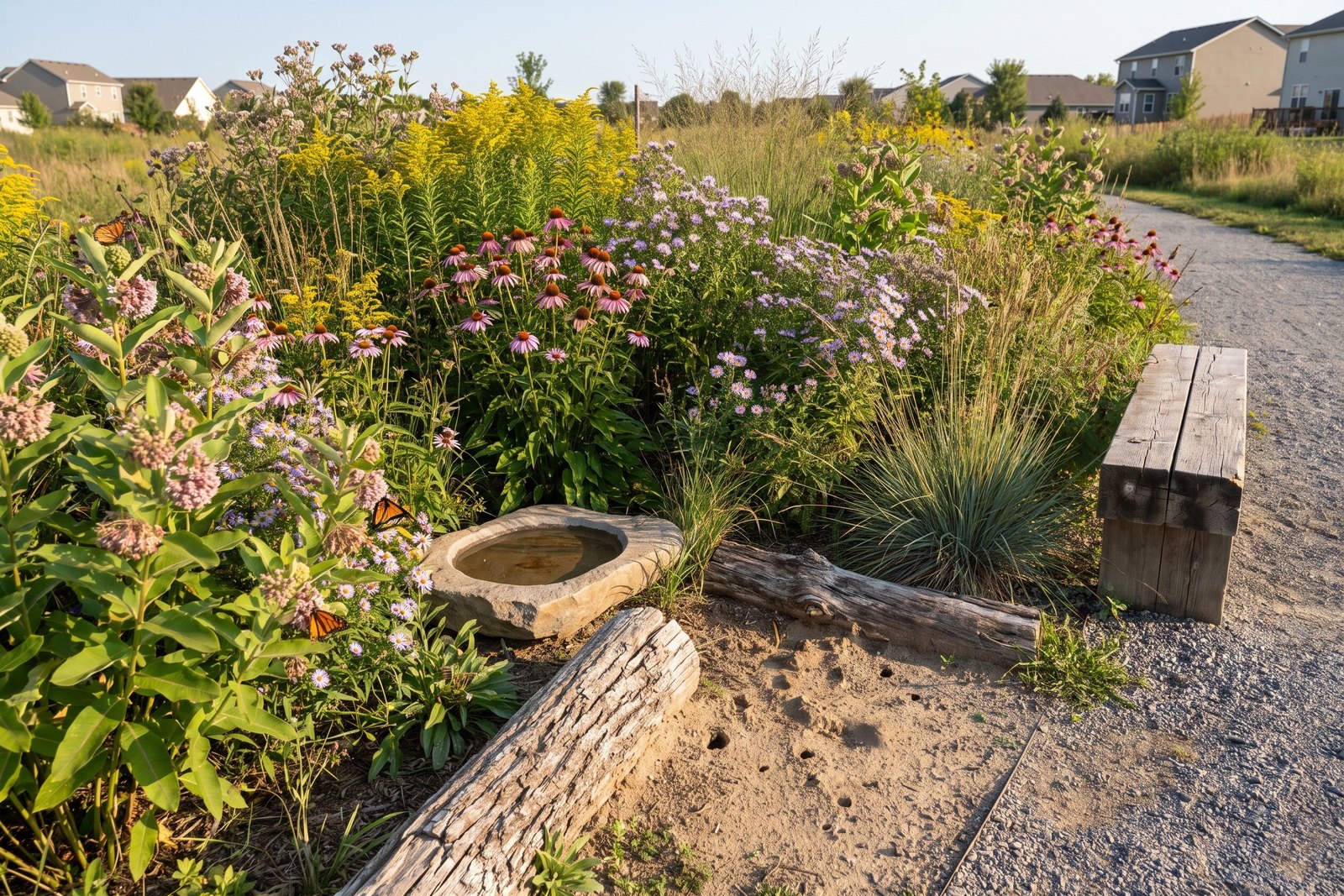
A pollinator patch does not need a park. A strip beside a path, a corner of a school ground or a few square meters behind a community hall can feed bees and butterflies for months. The one idea that matters most is that a small patch works when it does three jobs at once: flowers in sequence for adults, host plants for caterpillars, and somewhere to nest, all kept free of sprays.
This page sets out choosing the spot, plants by the job they do, a flowering sequence, nesting and water, and the plants growers list for it. It draws on the monarch programs and the pollinator bodies named below. It also draws on HortOS, a free directory of American wholesale plant growers with their published availability and trade prices. Planning a pollinator planting with trade suppliers covers larger plantings ordered from the trade.
Quick facts
| Size | A patch can be small. A strip of about nine square meters, or several smaller pieces, still works when it is planted densely. |
|---|---|
| Sun | Most pollinator plants and most butterflies need sun. Choose a spot with at least six hours of it. |
| Three jobs | Flowers in sequence for adults, host plants for caterpillars, and bare soil or hollow stems for nesting. |
| No sprays | Insecticides kill the insects the patch is for. Ask growers whether plants were treated with systemic insecticides. |
| Natives first | Native plants feed native insects best and are the ones the regional guides name. |
| Where the growers are | Growers near the patch are on the state hubs: Florida, California, Pennsylvania. |
What the patch is for
Monarch Watch recommends that a Monarch Waystation include at least 10 milkweed plants of two or more species, since different milkweeds flower at different times, and says a larger number of one species also works. It sets no minimum area for certifying a habitat, says waystations function best at 100 square feet or more, and suggests a spot with at least six hours of sun a day.
The Monarch Joint Venture adds that adult monarchs need nectar through the whole season and recommends a variety of native flowering species with different bloom times. It says habitat can be made in any open space protected from untimely mowing or pesticide use.
Plants by the job they do
- Nectar and pollen. Flowering perennials, shrubs and small trees feed adult bees, butterflies and other pollinators. Plant drifts of five or more of each, not single plants.
- Host plants. Caterpillars eat particular plants. Milkweeds are the only host plants for monarch caterpillars. Native grasses and shrubs host many native butterflies and moths.
- Nesting. Most native bees nest alone in bare ground or hollow stems. Leave a patch of bare, sunny soil and some stems standing over the cold months.
- Water. A shallow dish with stones to land on gives insects water on hot days.
- Shelter. Plants set close together, without crowding, give shelter from wind and predators.
The table lists native plants of the kind a pollinator patch uses, with how many growers listed each on HortOS on 25 October 2026. Prices are medians across growers' current trade lists on HortOS on 25 October 2026: one price per grower, ex tax, freight not included, with the number of growers pricing each size in brackets. Grower counts are the growers listing each plant on HortOS on 25 October 2026, in any size. A median needs three growers pricing a size. Anyone can see the prices on HortOS, and only the trade can order.
| Plant | Growers listing it | Size most growers price | Median there |
|---|---|---|---|
| Butterfly milkweed (Asclepias tuberosa) | 71 | #1 (21) | $4.50 |
| Swamp milkweed (Asclepias incarnata) | 58 | #1 (18) | $4.75 |
| Purple coneflower (Echinacea purpurea) | 55 | #1 (13) | $4.80 |
| Orange coneflower (Rudbeckia fulgida) | 43 | #1 (10) | $5.83 |
| Dense blazing star (Liatris spicata) | 40 | #1 (9) | $4.25 |
| Wild bergamot (Monarda fistulosa) | 33 | #1 (6) | $5.23 |
| Clustered mountain mint (Pycnanthemum muticum) | 32 | #1 (7) | $6.00 |
| Lanceleaf coreopsis (Coreopsis lanceolata) | 32 | #1 (12) | $3.88 |
| Foxglove beardtongue (Penstemon digitalis) | 22 | #1 (4) | $4.56 |
| Golden alexanders (Zizia aurea) | 20 | #1 (5) | $4.50 |
| Blue mistflower (Conoclinium coelestinum) | 18 | #1 (8) | $4.73 |
| Common milkweed (Asclepias syriaca) | 15 | Fewer than three growers | Not shown |
| Wrinkleleaf goldenrod (Solidago rugosa) | 11 | Fewer than three growers | Not shown |
Of the plants in the table, butterfly milkweed (Asclepias tuberosa) had the most growers listing it, 71, and wrinkleleaf goldenrod (Solidago rugosa) the fewest of those shown, 11. A count here is growers listing the plant, not how well it suits a site. Native milkweeds for monarchs and keystone plants for the eastern United States go further on the eastern plants.
A flowering sequence
A patch that flowers only in late spring feeds nothing for the rest of the year. List the plants by month of flowering and fill the gaps, with the early and late flowers in the biggest numbers because they are the scarce ones. Three or four plants for each part of the season is enough for a small patch.
Native grasses earn a place beside the flowers. Many native butterflies lay their eggs on grasses, and a clump of grass shelters ground-nesting bees and beetles. Where a patch meets a lawn, a strip left unmown through spring and summer extends the patch for nothing, and shows neighbors the change is deliberate when its edge is mown neatly.
Plant in the cooler months so roots establish before the first hot spell, and water weekly for the first summer. Cut back in late winter rather than fall, so seed heads feed birds and hollow stems shelter insects through the cold months.
Where a patch fits
Small patches work best where people already pass and someone already cares for the ground. A school ground, the edge of a community garden, a church yard, the front of a hall and the parkway strip outside a home are all common sites. A parkway strip or a park belongs to the city or county, so ask before digging, and ask whether there is a program that supports residents planting there.
A patch beside a path is also a teaching patch. A small sign naming the plants and saying why the soil is left bare in places answers the questions neighbors ask and stops a tidy-minded volunteer from mulching over the nesting ground.
Keeping the patch going
The first year is about roots. Water weekly in dry weather, pull weeds by hand rather than spraying, and replace the few plants that fail with more of the ones that thrived. From the second year the patch needs little more than a cut back in late winter, a check for weeds each month, and a note of what flowered when.
Resist the urge to tidy. Seed heads left standing feed birds, hollow stems shelter insects through the cold months, and leaf litter under shrubs is where many insects spend the winter.
Buying the plants
Pollinator plants are mostly sold small, as plugs and #1 containers, and a small patch needs a tray or two. On the live us.hortosapp.com price pages on 24 September 2026 the median trade price of the line most growers price was $3.00 for a #1 and $6.00 for a #3, ex tax, one price per grower. Ask the grower two questions before ordering: whether the plants are the straight native species or a cultivar, since double flowers and some selections feed less, and whether they were treated with a systemic insecticide.
Buy from growers near the patch where you can. Plants raised in the same climate settle faster, a short trip keeps small plants in good condition, and a nearby grower is easy to go back to for the few plants that fail in the first year. Order a few more than the plan needs, and keep them in pots for gaps.
What to watch for
- Single plants of many kinds. Pollinators find drifts, not specimens. Plant five or more of each.
- All spring. Fill the late summer and fall gaps first, then the early spring.
- Sprayed plants. Plants treated with a systemic insecticide can harm the insects they are meant to feed. Ask before buying.
- Too tidy. Bare soil, standing stems and leaf litter are nesting sites. Do not mulch every centimetre or cut everything back in fall.
- Shade. A patch in shade grows leaves, not flowers. Find the sunniest spot there is.
Getting it right
- Choose a sunny spot, as small as a few square meters, protected from mowing and sprays.
- Take the plant list from the regional guide and check which plants growers near you list.
- Plant in drifts, with host plants, a flowering sequence across the season, at least 10 milkweeds for a waystation.
- Leave bare sunny soil and some hollow stems, and add a shallow water dish.
- Plant in the cooler months, water weekly through the first summer, and cut back in late winter.
- Register the patch as a Monarch Waystation if it qualifies, and record what flowers when, to fill gaps next year.
A word of caution
Which plants feed which pollinators in a region is the regional guides' to say, and this page does not rank them. The plant counts are what HortOS printed on 25 October 2026, and the live pages change as growers update their lists. On treatments and stock the grower's written answer is the record.
Sources
- Monarch Watch, Monarch Waystation Program: waystation size, sun and milkweeds.
- Monarch Joint Venture, Create habitat for monarchs: milkweeds, nectar and bloom times.
- Pollinator Partnership, ecoregional planting guides: pollinator plants by ecoregion.
- Lady Bird Johnson Wildflower Center, native plant database: native plants by state and use.
- National Wildlife Federation, Native Plant Habitats: food, water, cover, places to raise young.
More guides

Planning a Pollinator Planting With Trade Suppliers
A pollinator planting list from a published regional guide is a wholesale order in disguise. This page shows how a club, a council or a conservation group matches the list to what growers list, chooses sizes and drifts, spreads flowering across the year, and asks the provenance, cultivar and chemical questions before the order goes in.
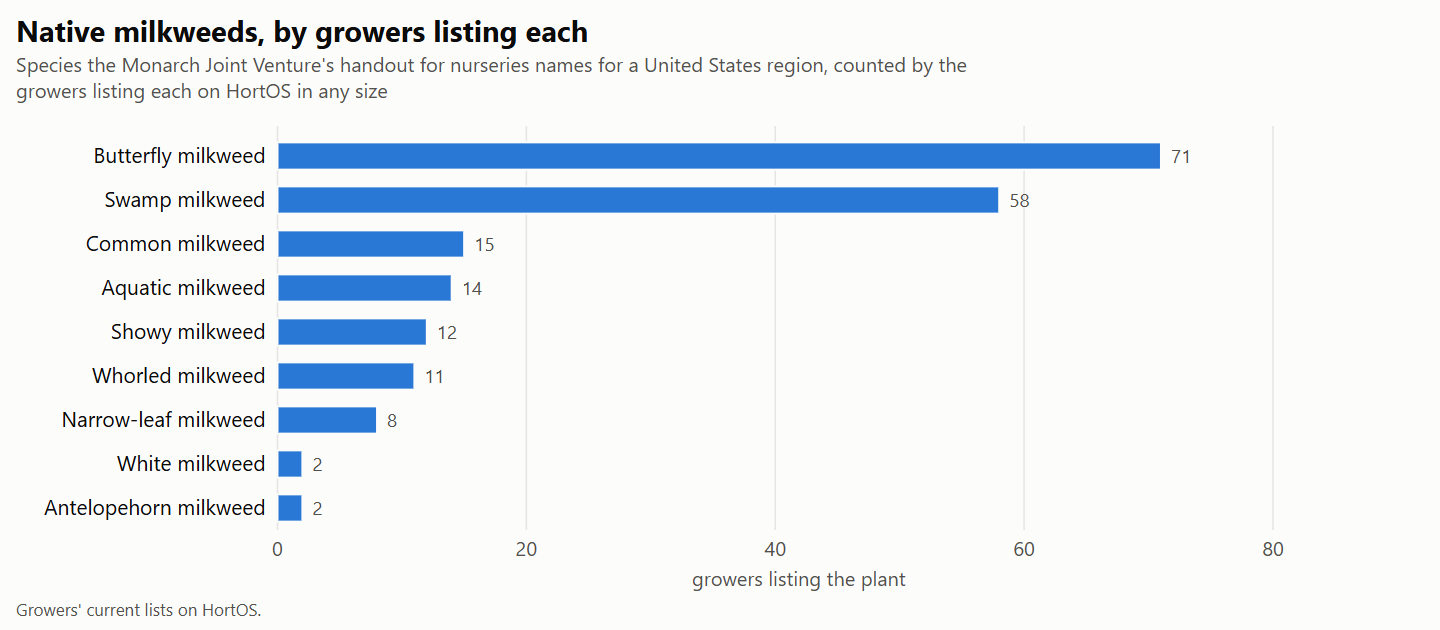
Native milkweeds for monarchs and the states where growers list them
The Monarch Joint Venture's handout for nurseries sorts native milkweed species under six United States regions. This page sets the species that have a plant page on HortOS beside how many growers list each and the states those growers are based in, with the monarch's federal status as filed and what a grower count cannot show.
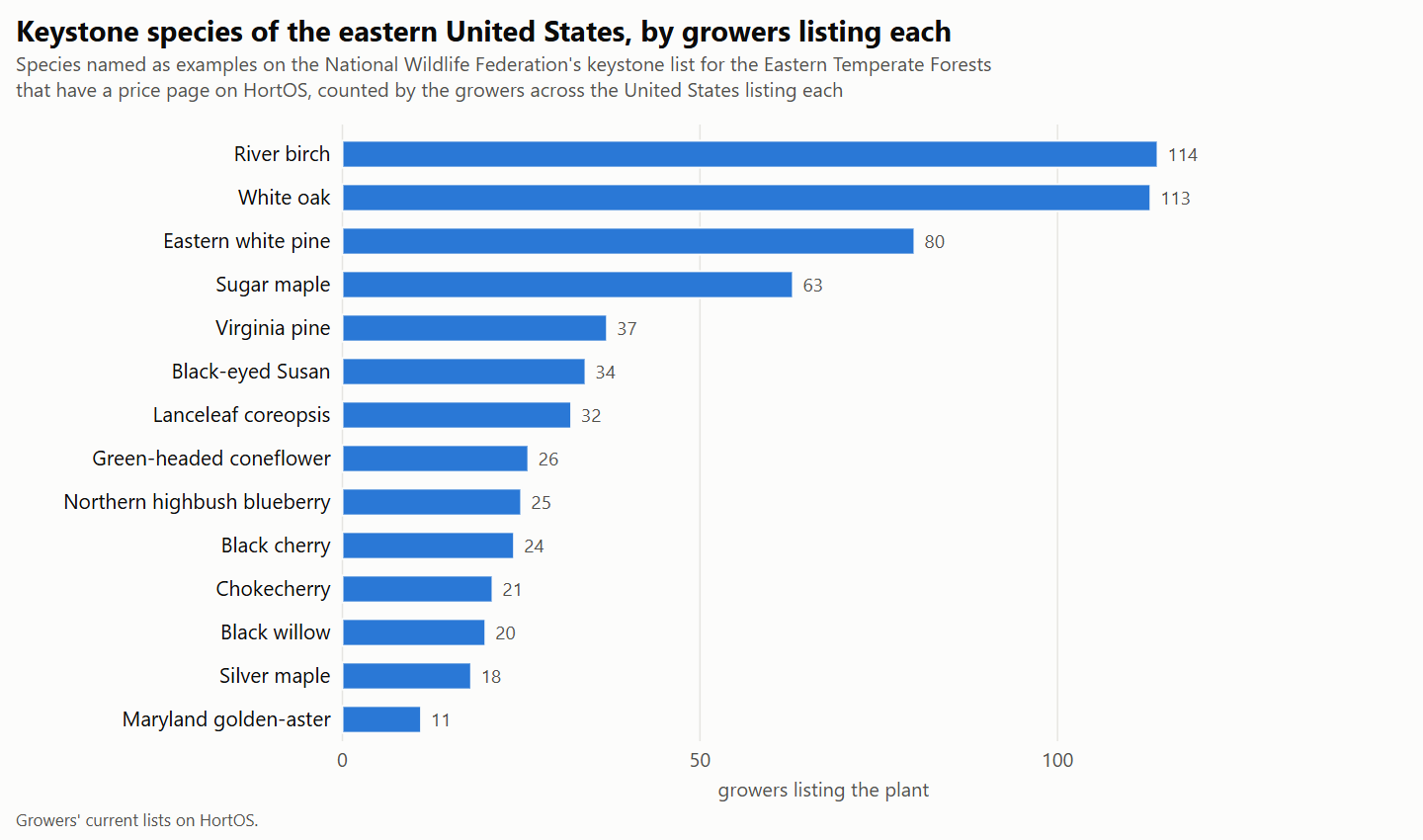
Keystone Plants of the Eastern United States by Growers Listing Each
The National Wildlife Federation's keystone list for the Eastern Temperate Forests is organized by genus and names sample species. This page sets out what the keystone figures count. It then shows how many growers list most of those species on HortOS, a median trade price where at least three price a size, and what a grower count cannot show.