Planning a Pollinator Planting With Trade Suppliers
A pollinator planting list from a published regional guide is a wholesale order in disguise. This page shows how a club, a council or a conservation group matches the list to what growers list, chooses sizes and drifts, spreads flowering across the year, and asks the provenance, cultivar and chemical questions before the order goes in.
Updated October 24, 2026. Grower counts from the live us.hortosapp.com state hubs on 24 September 2026; median trade prices from the live price pages the same day, ahead of the first United States edition of the HortOS Plant Price Index.
On this page
A pollinator planting is judged in its second summer, when the bees and the butterflies either come or do not, and the difference is set the winter before by what was ordered. The one idea that matters most is that a planting list from a pollinator guide is a wholesale order in disguise. The species on it are listed by growers in particular sizes and seasons, and the group that reads the trade lists before it finalizes the design gets the plants it designed for.
This page takes a pollinator planting from the guide to the grower: choosing from a published list, matching the list to what growers actually list, sizes and spacing, flowering across the year, and the questions about provenance and chemicals that a conservation group will want answered. It draws on the Pollinator Partnership's ecoregional planting guides and the Lady Bird Johnson Wildflower Center's native plant database, and on HortOS, a free directory of American wholesale plant growers with their published availability and trade prices. It does not rank plants for pollinators, which the named guides do for each region.
Quick facts
| Start from a published list | Use the Pollinator Partnership's ecoregional planting guides and the Lady Bird Johnson Wildflower Center's native plant database, written for your region, then check each species on HortOS to see which growers list it and in what size. |
|---|---|
| The sizes | Perennials and grasses come as plugs or #1 containers; shrubs as #1 or #3. On the live price pages on 24 September 2026 the median of the line most growers price was $3.00 for a #1 and $6.00 for a #3, ex tax. |
| Spacing | Perennials and grasses at 300 to 500 mm centers, four to eleven to the square meter; shrubs at 750 mm to 1.5 m. Drifts of five to nine of a kind read better to a bee than one of everything. |
| Flowering across the year | A list that flowers only in spring feeds nothing in late summer. Spread the species so something is in flower from early spring to the first frosts, or year round where there is no frost. |
| Straight species or cultivar | A pollinator guide usually names the species. Growers list many of them as named cultivars; ask whether the flower is unchanged, because double and sterile forms feed less. |
| Lead time | Most of the trade's planting is done in spring and fall; a grower's spring liners were sown or struck the summer before. Plugs and tubes of perennials are sown the summer before; order the season ahead. |
From the guide to the grower's list
A pollinator guide tells a group what to plant; a grower's list tells it what can be bought. The two rarely match line for line. A guide names a species, and the growers near the site list a cultivar of it, or list it only in one size, or list it under a synonym. On 24 September 2026, 37 of the 100 plants listed by the most American growers on us.hortosapp.com were native species, and the most listed of them included muhly grass, with 259 growers, which is a sign of how far native plants have moved into the trade.
The method is to take the guide's list and look up each species on HortOS. The plant page shows the growers listing it, the sizes and, where enough growers price a size, the median. A species no grower near the site lists is swapped for the next on the guide's list that growers do list, before the design is drawn, not after the order fails. The state hubs (Florida, California, Pennsylvania, North Carolina) show the growers by town with the number of lines each has published.
Sizes, spacing and the order
Pollinator plantings are mostly perennials, grasses and small shrubs, and the trade grows them small. Perennials and grasses come as plugs or #1 containers; shrubs as #1 or #3. On the live price pages on 24 September 2026 the median of the line most growers price was $3.00 for a #1 and $6.00 for a #3, ex tax. A small plant in a well prepared bed catches up with a large one in a season and costs a third as much, which is why a volunteer planting of two hundred tubes beats fifty pots for the same money.
| Layer | Typical size | Spacing | Per 10 square meters |
|---|---|---|---|
| Groundcovers and low perennials | a liner | 300 to 400 mm | 60 to 110 |
| Grasses and taller perennials | a liner or a #3 container | 400 to 500 mm | 40 to 60 |
| Small shrubs | a #3 container | 750 mm to 1 m | 10 to 18 |
| Larger shrubs and small trees | a #7 container | 1.5 to 3 m | 1 to 4 |
Order in drifts: five, seven or nine of a kind, which is how a pollinator finds a plant and how a grower sells a tray. Buying plants in bulk for a community group explains trays, minimums and quotes, and plant grades and container sizes by market explains what each size name means.
Flowering across the year
The commonest failure of a pollinator bed is a crowded spring and an empty late summer. Write the species list as a calendar with a column for each month and a mark for each species in flower, and fill the gaps before the order goes in. Early and late flowers are the scarce ones, so they are the species to order first and in the biggest drifts.
The first summer decides the bed. Small plants in a prepared bed want a deep watering a week for the first eight to twelve weeks, a mulch that keeps the soil covered without smothering the crowns, and a hand through the bed each fortnight for the weeds that arrive with the mulch. A group that costs that watering into the plan loses a few plants; one that does not replants the bed.
The second commonest failure is cutting everything back at once. Leave seed heads and hollow stems through the cold months where the site allows; the published guides for each region say which species matter for nesting and overwintering, and the maintenance plan should be written with the planting plan.
Provenance, cultivars and chemicals
- Provenance. A native species grown from seed collected near the site suits the local pollinators and the local soil. A production nursery growing a national range may not be able to say where its seed came from; a native specializt usually can. Ask, and specify it in the quote where the site or the funder needs it.
- Cultivars. Many of the plants growers list are named cultivars chosen for compact habit or a longer flowering season. Some feed as well as the species; double flowers, sterile hybrids and some color selections feed less. The published guides name the forms to avoid; where they are silent, ask the grower whether the flower is the species type.
- Chemicals. A grower treats pests to keep its stock saleable, and a conservation group may want to know what was used and when. Ask the question plainly before the order, and give the grower time to answer it. The american standard for nursery stock, ansi z60.1, which americanhort publishes and which sets the root ball, container and caliper relationships buyers specify against is the scheme to ask a grower about.
What to watch for
- Designing before reading the lists. A design built on a species no grower lists is redrawn in the planting week. Check the lists first.
- One of everything. A bed of forty species in ones is a collection, not a planting. Pollinators work drifts; so do volunteers with a tray.
- All spring. Fill the calendar before the order, with the late summer and fall species in the biggest numbers.
- Large pots for show. Perennials in large pots cost three to five times the tube and establish no faster in a prepared bed. Spend the difference on more plants and on mulch.
- No maintenance plan. A pollinator bed is a managed meadow, not a lawn. Decide who cuts back, when, and what is left standing before the first spring.
Getting it right
- Take the species list from the published guide for your region and write it as a flowering calendar.
- Look each species up on HortOS, note the growers near the site that list it and the sizes, and swap any species nobody lists for the next on the guide's list.
- Set the drifts and the spacing, convert them to counts, and round up to trays.
- Ask three growers for a written quote ex tax with the dispatch date, the provenance question and the chemicals question in the same email.
- Order the season ahead; order the mulch and the edging at the same time.
- Write the maintenance plan with the planting plan, and photograph the bed each month of the second summer.
A word of caution
The grower counts and prices on this page are what HortOS printed on 24 September 2026, and the live pages change as lists arrive. Which plants feed which pollinators in a region is the published guides' to say, and this page does not rank them. On provenance, treatments and terms, the grower's word is the one that counts, and HortOS never answers on a grower's behalf.
Sources
- Pollinator Partnership, ecoregional planting guides: pollinator plants by ecoregion.
- Lady Bird Johnson Wildflower Center, native plant database: native plants by state and use.
- USDA PLANTS database: native status and distribution.
- USDA Plant Hardiness Zone Map: zones for plant selection.
- AmericanHort, American Standard for Nursery Stock (ANSI Z60.1): container classes, caliper and root balls.
More guides
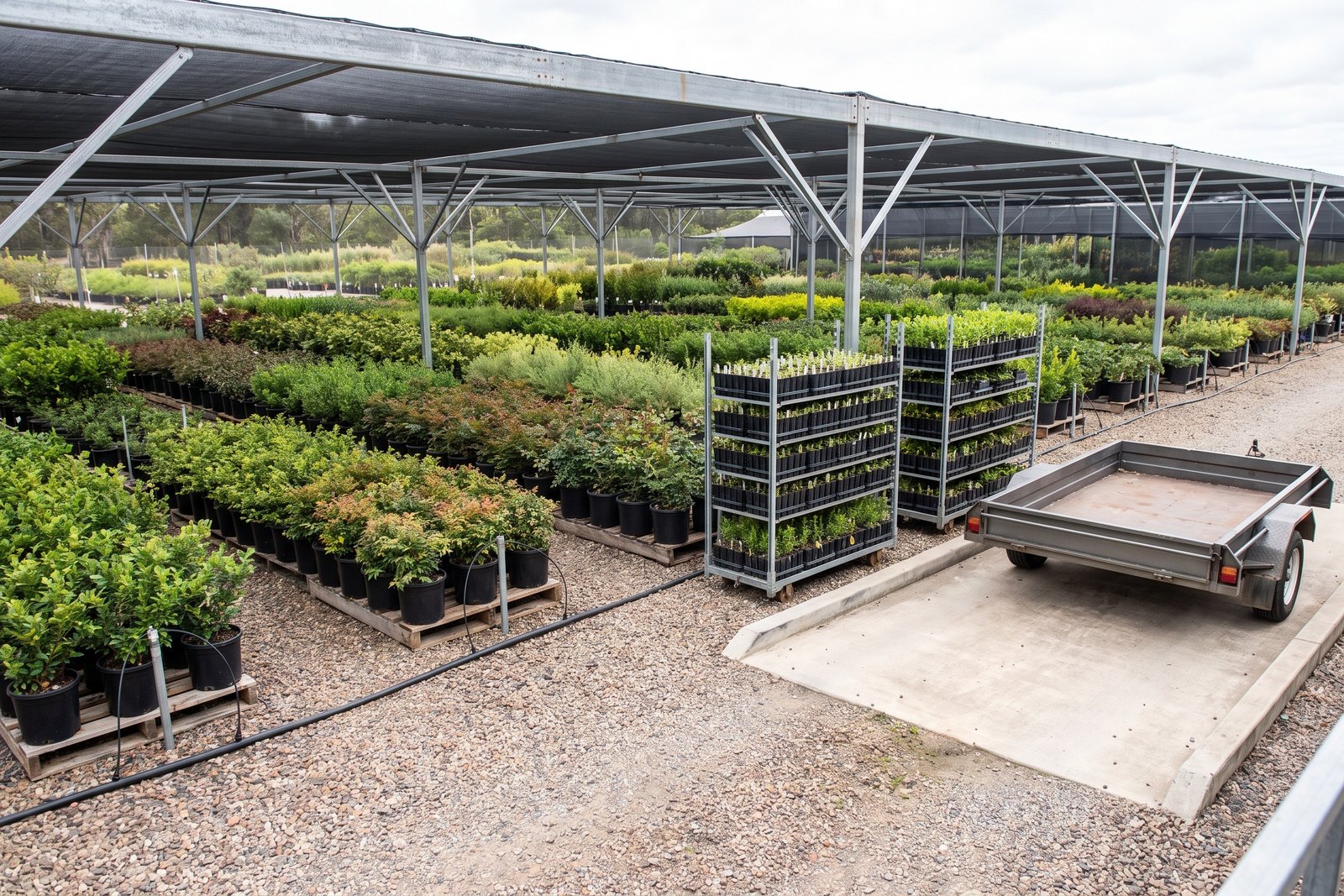
Buying Plants in Bulk for a Community Group
Garden clubs, community gardens, schools and friends groups can buy plants by the tray and the cart from wholesale growers when they order like the trade. This page explains what bulk means to a grower, the three ways a group buys, how to turn a plan into quantities, what a quote request needs and how collection day works.
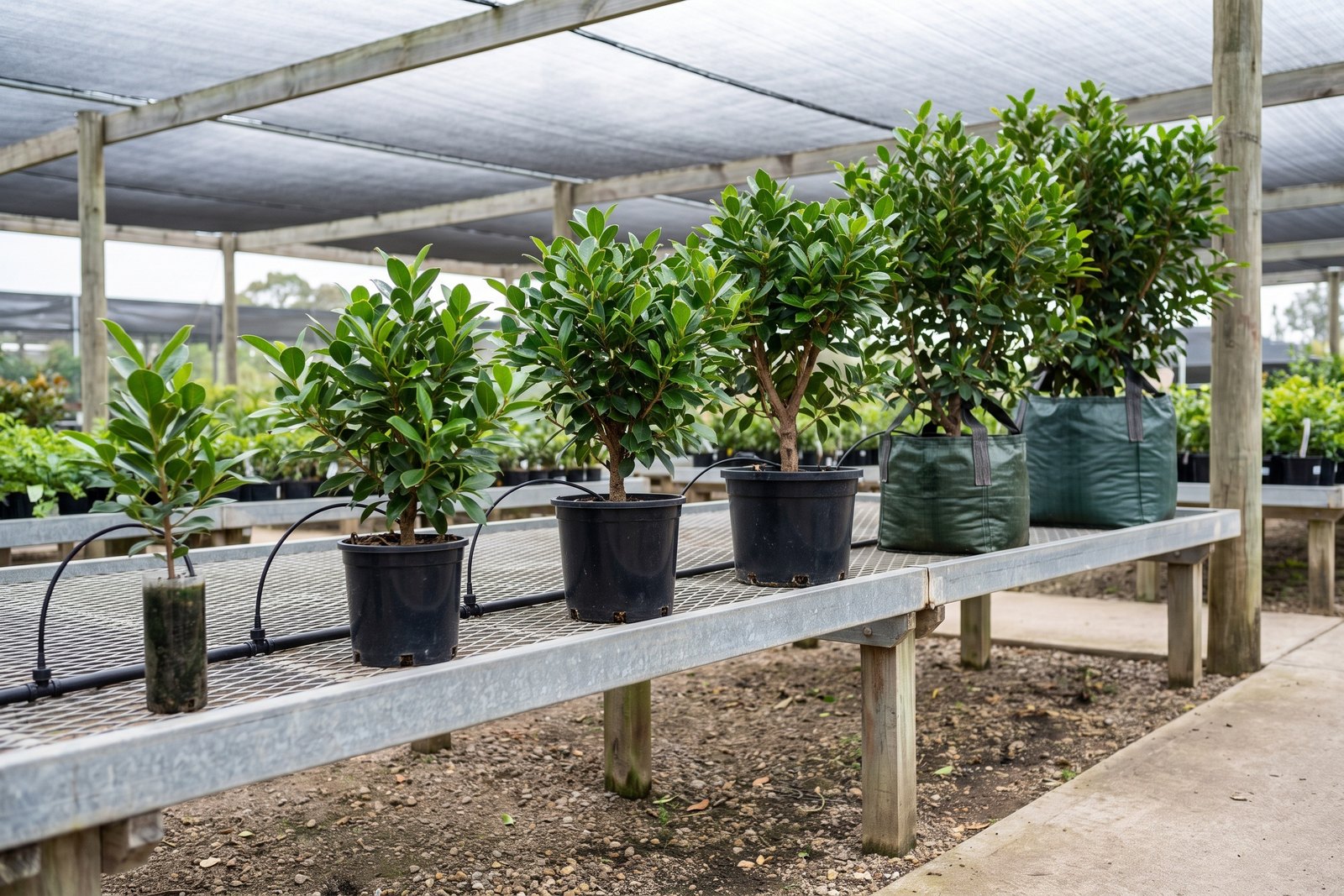
Plant Grades and Container Sizes, Market by Market
A #3 in Florida, a 200 mm pot in Sydney, a PB5 in Hamilton and a #2 in Ontario are roughly the same plant. This page sets the four markets' size ladders side by side from plug to field grown tree, explains what each grade is and how old, and names the standard each market specifies against.
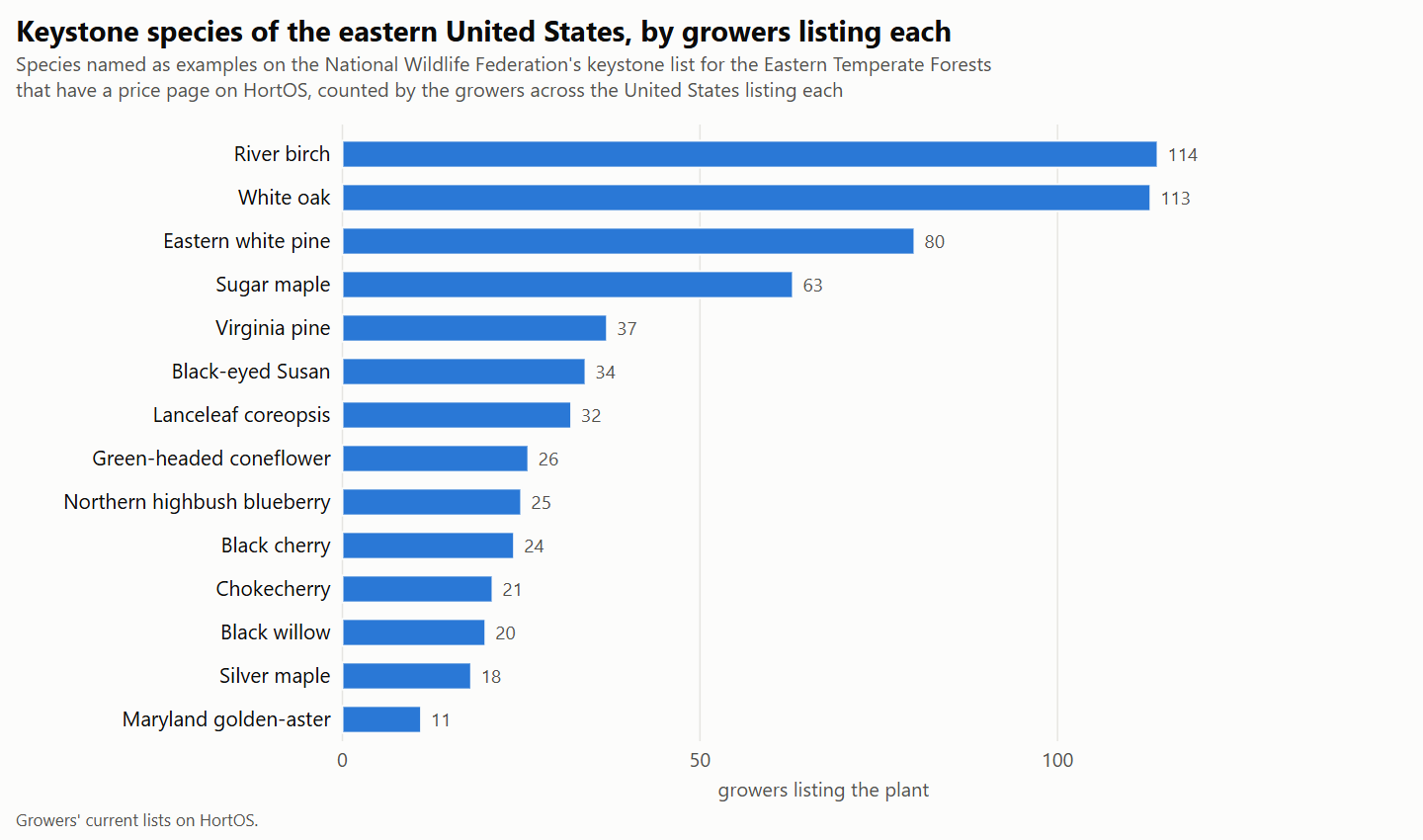
Keystone Plants of the Eastern United States by Growers Listing Each
The National Wildlife Federation's keystone list for the Eastern Temperate Forests is organized by genus and names sample species. This page sets out what the keystone figures count. It then shows how many growers list most of those species on HortOS, a median trade price where at least three price a size, and what a grower count cannot show.