Bald Cypress: The Tree That Drinks the Flood
A guest piece by Chris of Living Root Garden in Florida on bald cypress, the deciduous conifer that wants the wettest corner of the yard: why it drops its needles, the puzzle of its knees, how to plant and grow it, what it gives wildlife, and the cultivars sized for smaller yards.
Updated November 7, 2026. A guest article by Chris of Living Root Garden, Florida, published 7 November 2026; the text is the author's own and this page quotes no HortOS figure.
On this page
A guest piece by Chris of Living Root Garden.
Most trees have one job in a landscape: stand there, look good, stay out of trouble. Bald cypress (Taxodium distichum) missed that memo. It is a conifer that drops its needles every autumn, a shade tree that wants the wettest, soggiest corner of the yard, the exact spot where everything else you planted gave up and died, and a plant that grows knobby knees out of the mud for reasons botanists still argue about at conferences. Gloriously weird, and if your yard has a low spot that floods, it may be the best tree you ever plant.
Quick facts
| The tree | Bald cypress, Taxodium distichum: one of the few deciduous conifers. The feathery foliage turns a warm russet in fall and drops, and the tree leafs out again in spring. |
|---|---|
| Size and hardiness | A wild bald cypress grows 50 to 70 feet tall and is hardy in USDA zones 8 to 11. Give it full sun and room. |
| Soil and planting | Wet to moist soil; plant in fall. Space trees 20 to 30 feet apart. |
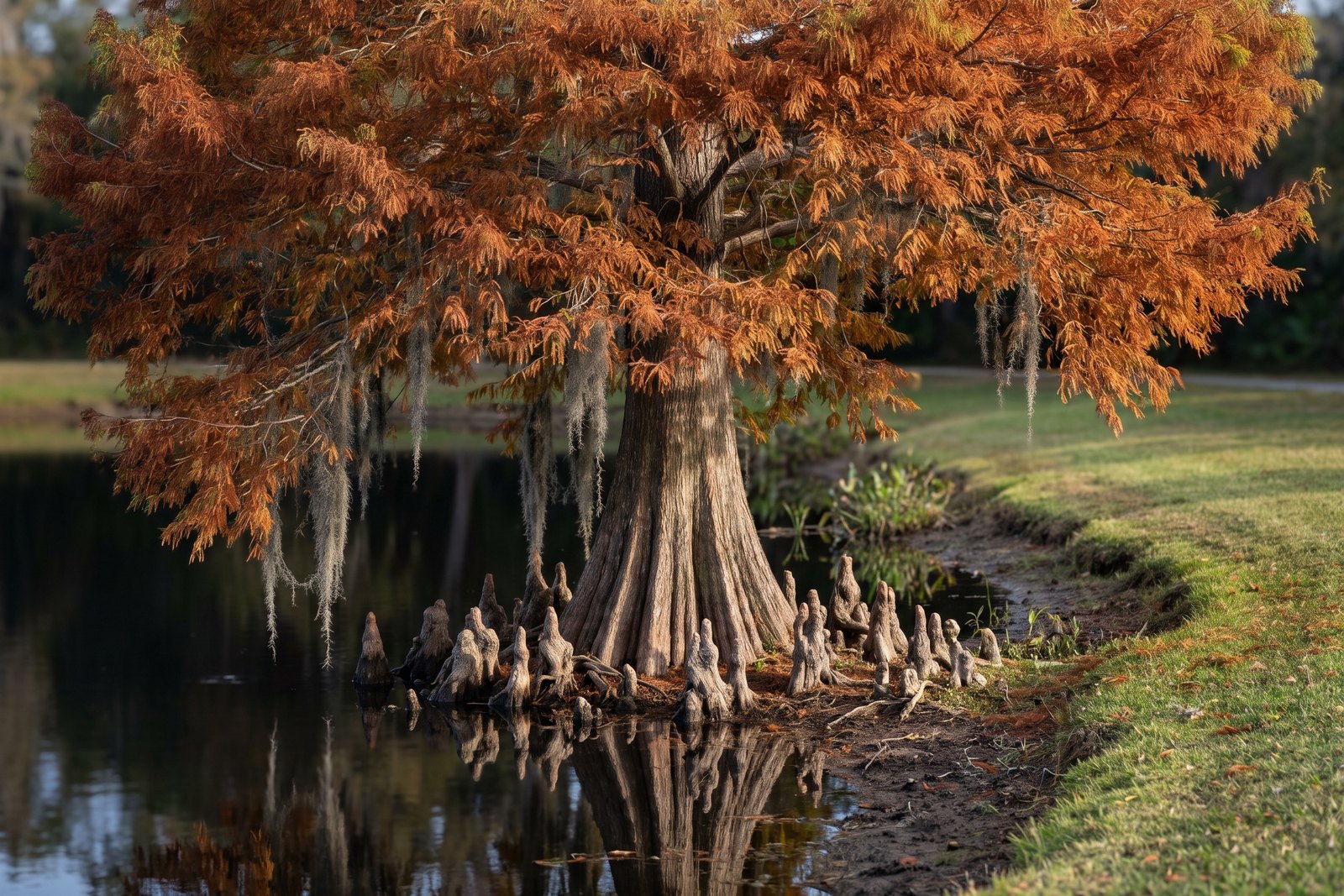
| The knees | Woody, knobby projections from the roots in wet soil. They can pop up in a lawn near the tree: mow around them or mulch the area. |
| Cultivars | 'Shawnee Brave', the narrow one; 'Cascade Falls', the weeper; 'Peve Minaret', the dwarf, 8 to 10 feet. |
| For drier ground | Its close cousin pond cypress, Taxodium ascendens, is the better pick where a spot is merely damp rather than genuinely wet. |
A conifer that changes its mind
Bald cypress is one of the few deciduous conifers, which is a polite way of saying it cannot decide what kind of tree it wants to be. All summer it wears soft, feathery foliage, no prickly needles here, and in fall the whole crown turns a warm russet before the needles drop. Come spring it leafs out again, good as new. The trunk is fluted and buttressed at the base, like the tree is bracing itself, and in humid country it often wears Spanish moss like a shawl.
Give it full sun and room: a wild bald cypress grows 50 to 70 feet tall and is hardy in USDA zones 8 to 11. It is an ancient lineage, the kind of tree that earns the nickname "living fossil", and it behaves like it, shrugging off conditions that would finish most landscape trees. Months of standing water? Fine. Hurricane winds? It handles those too. This is a tree built for the wet end of the world.
The knees: botany's favorite argument
Then there are the knees. In wet soil, bald cypress sends up woody, knobby projections from its roots, rising out of the mud or the shallow water around the trunk. They look like the tree is kneeling in the swamp, and they are one of botany's great unsolved mysteries.
One leading idea is that the knees help stabilize the tree in soft, shifting mud. Another is that they ferry oxygen down to roots that spend their lives underwater, the tree equivalent of a snorkel. After centuries of study, scientists still argue about it at conferences, which is the most honest answer in this whole article: nobody knows for sure, and the tree is not telling.
What you do need to know is practical: knees can pop up in a lawn near the tree. Mow around them or mulch the area rather than fighting them. They are part of the deal, and the deal is a good one.
How to grow it (spoiler: add water)
Plant bald cypress in fall, in wet to moist soil. It thrives where other trees drown. Space trees 20 to 30 feet apart, because that 50- to 70-foot crown needs elbow room.
The single biggest mistake people make with this tree is planting it in a dry spot and then wondering why it sulks. It is not being difficult. It is a wetland tree, and it is asking you, politely and repeatedly, for water.
Once established, it is about as low-maintenance as a tree gets. It is virtually pest-free, it tolerates flooding that would kill most species outright, and it asks for nothing more exotic than sun and wet feet.
Propagation is straightforward if you are patient: seeds need cold stratification and consistently moist soil, sow in fall in wet ground, and it also grows from cuttings.
Wildlife value: a wetland bed-and-breakfast
Plant a bald cypress and you are effectively opening a bed-and-breakfast for the whole wetland. Its seeds feed ducks, wood ducks especially, along with turkeys and squirrels. Old hollow trunks shelter owls, bats, and raccoons. Down in the water, the knees and roots give fish somewhere to hide and hunt among the flooded forest. A single tree becomes structure, pantry, and nursery all at once, which is a lot of ecological return for a plant that mostly just stands there drinking the flood.
Too big for your yard? Meet the cultivars
The wild tree's one real landscape problem is size, and the cultivars solve it.
'Shawnee Brave' is the narrow one, a tall, pyramidal column for yards too small for a wild cypress. 'Cascade Falls' is the weeper, with serpentine, cascading branches that make it a living focal point. 'Peve Minaret' is the dwarf, a narrow column of just 8 to 10 feet for small gardens. Same tree, same feathery foliage, same love of water, just sized for the space you actually have.
And if your spot is merely damp rather than genuinely wet, consider its close cousin pond cypress (Taxodium ascendens), which is the better pick for drier ground.
The Florida note
In Florida, bald cypress is the signature wetland tree, the feathery green crown over black water, knees rising from the shallows, the tree that makes a pond edge look like it has always been there. It belongs in rain gardens, along lake edges, and in every soggy low spot a yard can offer.
If your ground stays wet, stop fighting it and plant the tree that was built for it. The flood is not a problem to solve. For a bald cypress, it is home.
Sources
- Living Root Garden, bald cypress (Taxodium distichum): the author's own guide to the tree.
More guides

The Most Grown Native Plants in the United States, by State
A data page, not an essay: the American native plants held by the most wholesale growers, counted grower by grower and state by state from growers' current lists on HortOS, with the median trade price at the size most growers price. Two paragraphs on what the tables show and what they do not, then the tables, refreshed each edition.
Deer Resistant Plants for the Northeast by Rating and Trade Price
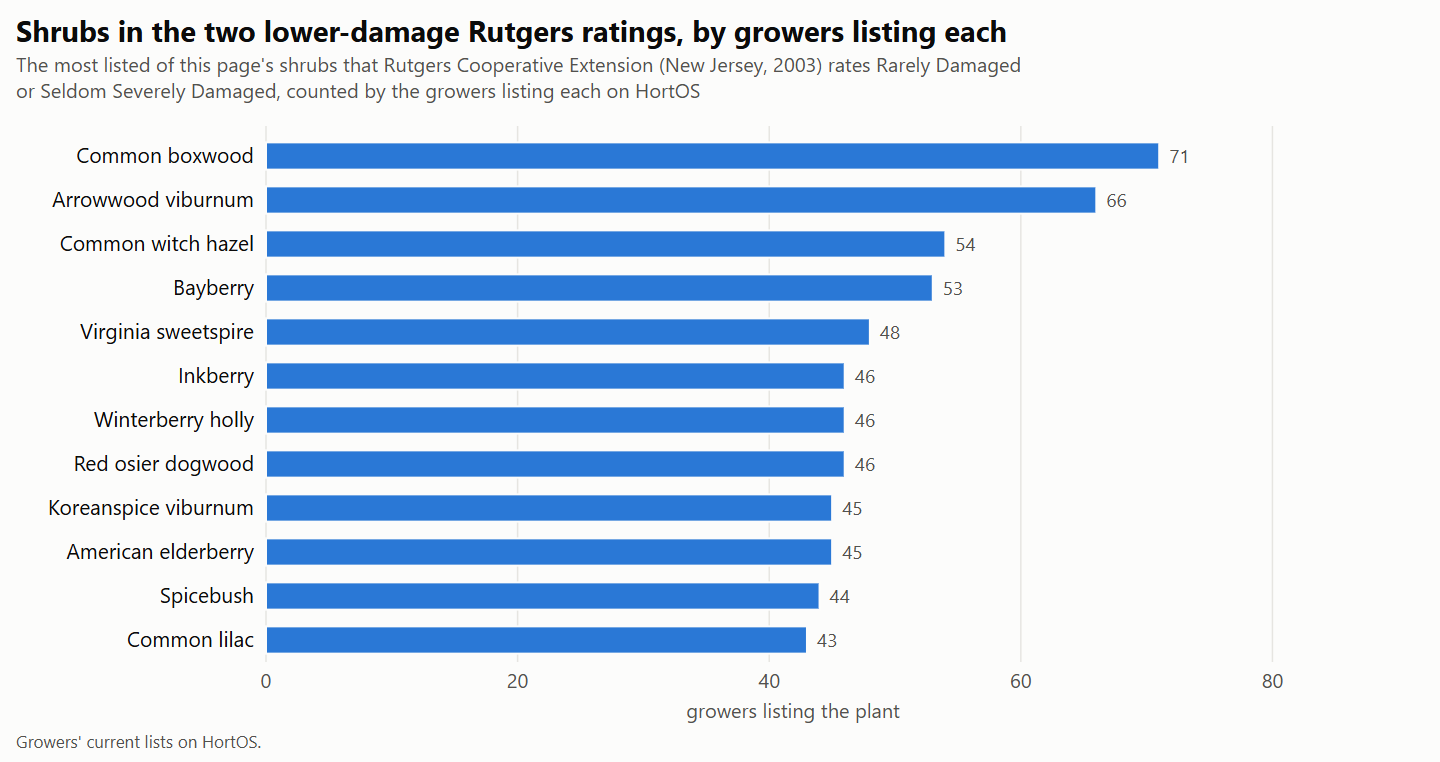
Rutgers Cooperative Extension (New Jersey, 2003) rates landscape plants in four classes by how often deer damage them. This page sets those ratings beside how many growers list each plant and, where enough growers price a size, its median trade price. It shows where a Maryland list and a New York county list differ, and what a rating leaves out.
Planting near power lines: utility rules and the plants they name
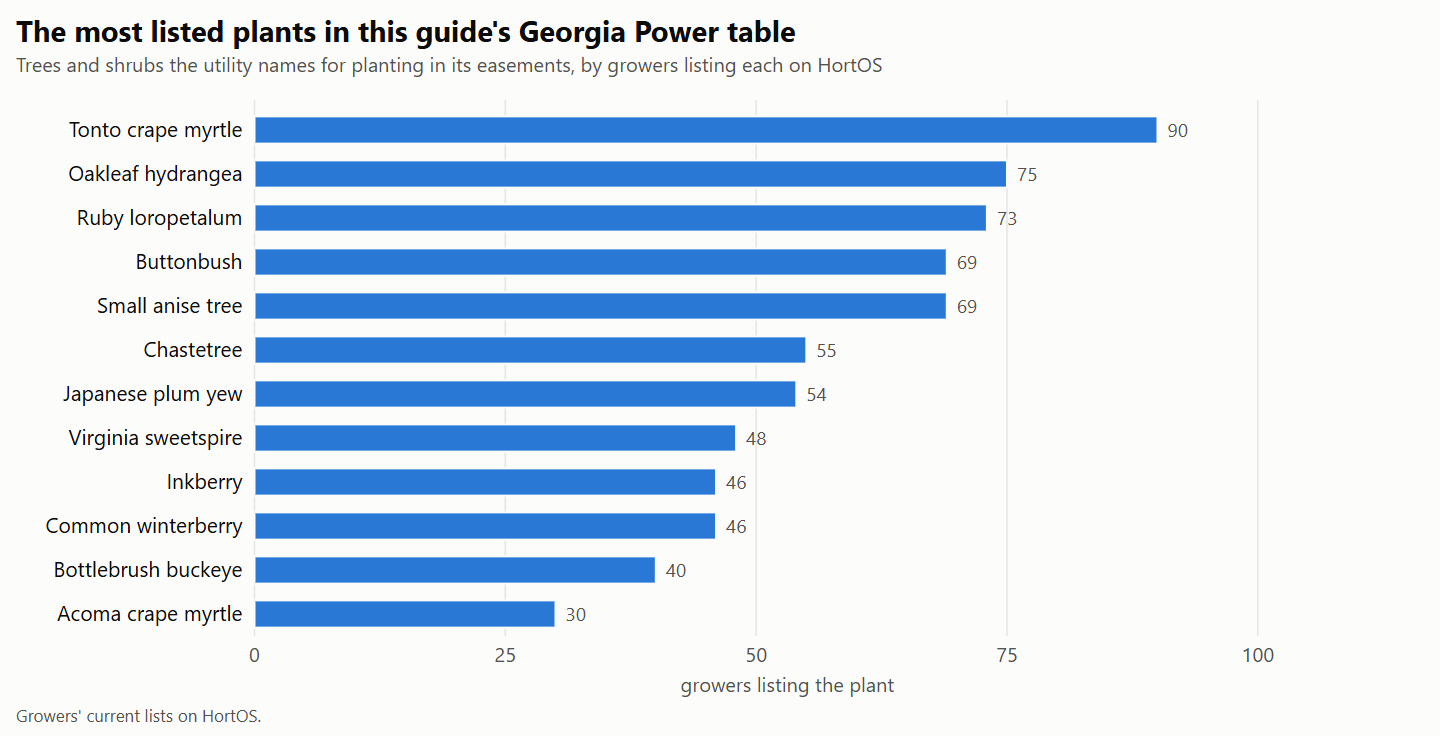
What Georgia Power, Florida Power & Light, Dominion Energy, Santee Cooper and Eversource publish about planting near distribution and transmission lines, beside a Florida statute, a New Jersey rule as published in 2010, a California general order and a national reliability standard. Tables set the plants Georgia Power and Santee Cooper name beside grower counts and median trade prices.