When to Order: Lead Times, Pre-Orders and Contract Growing
Every plant on a grower's list is a decision made a season or more ago. This page explains how long each grade takes to grow, the three ways a buyer secures stock ahead of the season, what a growing contract contains, the planting calendar in this market and how to read a current list for the year ahead.
Updated October 24, 2026. Grower counts from the live us.hortosapp.com state hubs on 24 September 2026; median trade prices from the live price pages the same day, ahead of the first United States edition of the HortOS Plant Price Index.
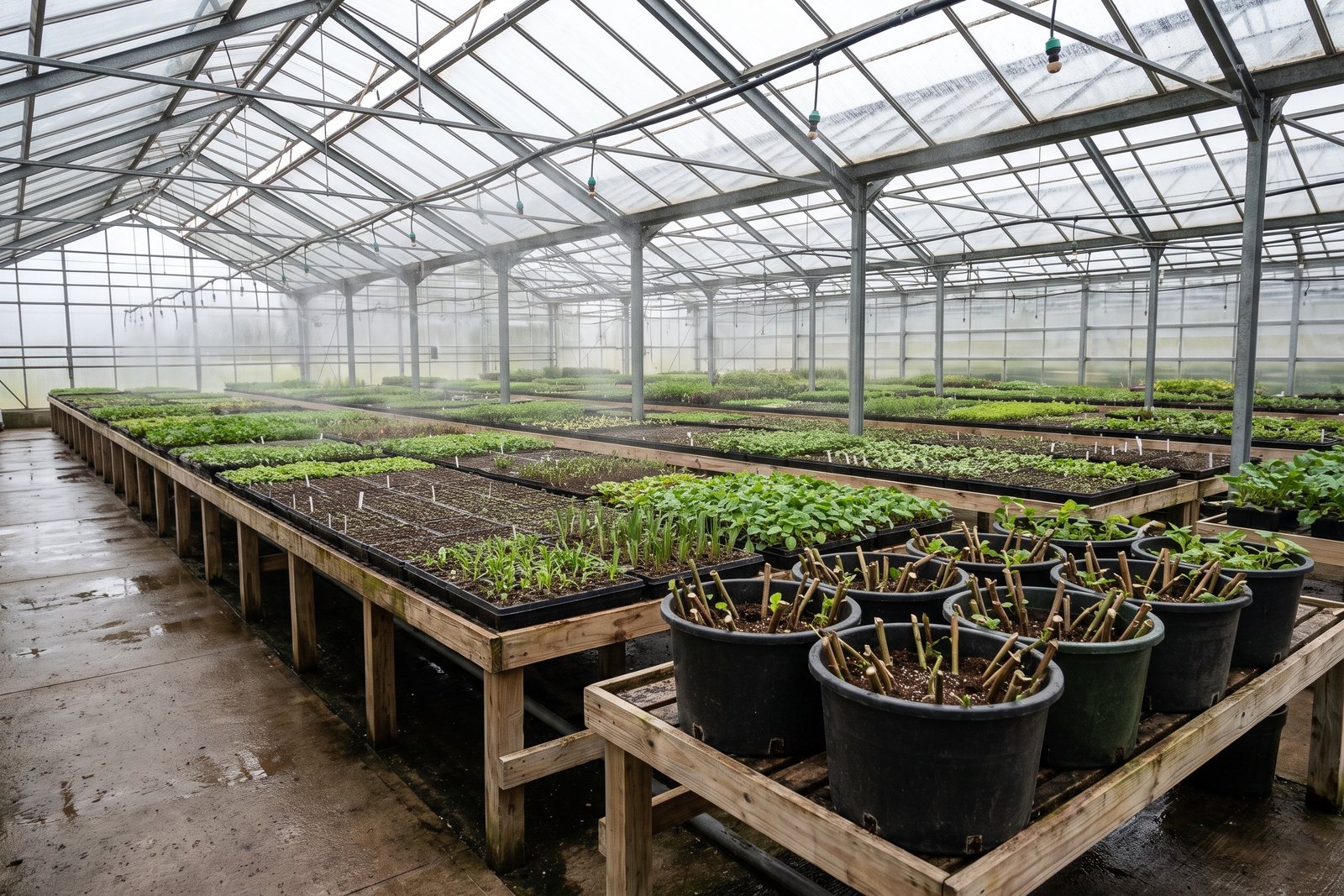
On this page
Every plant on a grower's list is a decision the grower made a season or several seasons ago: what to sow, what to pot on, what to hold for another year. The one idea that matters most is that a buyer who orders inside those decisions, a year ahead for small stock and several years for trees, plants what it designed, and a buyer who orders in the planting season plants what everyone else left.
This page explains how long each grade takes to grow, the three ways a buyer secures stock ahead of the season, pre-order, hold and contract growing, what a growing contract contains, the planting calendar in this market and how to read a current list for the season ahead. Most of the trade's planting is done in spring and fall; a grower's spring liners were sown or struck the summer before. It draws on HortOS, a free directory of American wholesale plant growers with their published availability and trade prices, where each grower's list is published with its date, and on what the industry's national body publishes. It is a guide to timing, not a promise about any grower's stock.
Quick facts
| How long a grade takes | A tube or plug is three to six months from seed or cutting; a first pot or #1, six to twelve months; a shrub grade or #3, about a year to eighteen months; a 45 liter bag or #15, three to four years; 200 liters or #65, five years or more. |
|---|---|
| Pre-order | Booking stock from a grower's forward list or its current list before the season, with a deposit where the grower asks for one, so the plants are held and potted on for the buyer. |
| Contract growing | The buyer specifies or supplies the seed or cuttings and the grower sows, grows and holds the plants under a written agreement with a deposit, milestones and a dispatch week. |
| The planting season | Most of the trade's planting is done in spring and fall; a grower's spring liners were sown or struck the summer before. |
| Who grows what | On 24 September 2026, 91 growers in Florida listed liners on us.hortosapp.com and 774 listed trees at #15 and larger, with 67 in Texas, 61 in North Carolina and 45 in Georgia listing advanced trees. |
| The list's date | Every list on HortOS carries the date it was updated. A current list is the season's top-up order; next season's order is a conversation with the grower now. |
How long a plant takes
A plant moves up a grade by being potted on, and each move costs a season of growth and a season of the grower's space. The table gives the common times; a fast perennial is quicker and a slow tree slower, and a grower's own figures are the ones to ask for.
| Grade | Time in the nursery | When it was started | Order it |
|---|---|---|---|
| Tube, plug, root trainer | 3 to 6 months | the summer or fall before | the season ahead |
| First pot: 140 mm, #1, PB3 | 6 to 12 months | a year before | the season ahead |
| Shrub grade: 200 mm, #3, PB5 | 9 to 18 months | one to two seasons before | the season ahead, or hold |
| Small tree: 400 mm, #7, 25 L | 2 to 3 years | two to three years before | a year ahead, or hold |
| Advanced tree: 45 L, #15 | 3 to 4 years | three years before | a year ahead, deposit |
| Mature tree: 200 L, #65 and over | 5 years and more | five years before | two years ahead, contract |
Plant grades and container sizes by market explains the grade names. The point of the table is the last column: the larger the grade, the earlier the order, because nobody grows a five year tree on the chance that someone will want it.
Three ways to secure stock
- Order from the current list. The list shows what the grower lists today, in the sizes it has. For a top-up, a small order or a planting that can take what is there, it is the whole method. On 24 September 2026, 91 growers in Florida listed liners on us.hortosapp.com and 774 listed trees at #15 and larger, with 67 in Texas, 61 in North Carolina and 45 in Georgia listing advanced trees.
- Pre-order and hold. A buyer confirms an order for stock the grower lists or will have by a date, pays a deposit where asked, and the grower holds and pots the plants on for it. The hold has a length in weeks or months, after which the stock goes back on the list or the hold is charged. This is how a landscaper secures a spring hedge in fall.
- Contract growing. The buyer specifies what is to be grown, from the grower's seed or the buyer's, and the grower sows, grows and holds it under a written agreement. The buyer carries the risk of changing its mind; the grower carries the risk of growing it well. This is how a revegetation project, a street tree run of one cultivar or a plant under a breeder's right that no grower lists gets grown at all.
What a growing contract contains
A growing agreement does not need to be long, and the good ones fit on two pages. The species and cultivars, with the botanical names. The grade and the specification each is grown to, with the standard named where one applies. The counts, and the allowance for losses in the nursery. The seed or cutting source, who supplies it and who keeps the records. The timetable: sowing, potting on, hardening off, dispatch week. The price per plant and the payment terms: a deposit on signing or sowing, a progress payment, the balance on dispatch. What happens if the buyer cancels, if the grower's crop fails, or if the planting is delayed by weather. And the inspection right, which is the buyer's visit before dispatch.
Sourcing native plants for a restoration project shows a contract growing timetable for revegetation, and specifying and procuring trees the clause a street tree contract is grown to.
The calendar in this market
Most of the trade's planting is done in spring and fall; a grower's spring liners were sown or struck the summer before. A grower's year runs backwards from that. Propagation of the next season's small stock happens in the warm months; potting on follows; the stock is hardened off outside in the weeks before the planting season; dispatch follows the first soaking rains or the frost date. A buyer who calls in the planting month finds the grower dispatching, not sowing.
The practical calendar for a buyer is one conversation a season early. In the planting season, plant this year's order and walk the nursery for next year's. Before propagation, confirm next year's species, grades and counts, and sign the contract for anything grown to order. Before dispatch, inspect, count against the contract and confirm the week. Reading a grower's price list and trade terms explains the hold, deposit and validity words a pre-order uses.
Reading a list for the season ahead
A current list on HortOS says three things to a buyer planning a season out. The grades a grower lists today say what it grows and roughly what it will have a size larger next year. The updated date says whether the grower is active this season. And the plant pages, which gather every grower's lines for a plant by size, say how many growers list a plant at all, which is the measure of how hard it will be to find next year. The state hubs (Florida, California, Pennsylvania, North Carolina) show the growers by town with the number of lines each has published.
Median trade prices in this guide are from the live us.hortosapp.com price pages on 24 September 2026: one price per grower, ex tax, freight not included, a median only where three or more growers price a class. A price on a list is today's; a price in a growing contract is the one that holds for the dispatch week, and it is usually a little above the list to pay for the holding.
What to watch for
- Ordering in the planting season. The month of the planting is the month the stock was sold. Order the season before; for trees, the year before.
- Treating a listed quantity as a reservation. Stock on a list is subject to prior sale until an order and a deposit hold it.
- A contract with no dispatch week. A growing agreement without a date is a hope. Put the week in, and the rule for weather.
- Changing the plan after sowing. A contract grown crop is the buyer's from the day it is sown. Settle the species and counts before, not after.
- No inspection before dispatch. The visit three months out is where a short count or a soft plant is fixed. Skipping it moves the problem to the planting day.
Getting it right
- Set the planting week, then count back by the grade's growing time to the order date.
- Walk the nursery or read the list during this year's planting for what will be a grade larger next year.
- Confirm next season's species, grades and counts before the grower propagates, and sign a growing contract for anything grown to order.
- Pay the deposit, agree the hold length and the dispatch week in writing, and diary the inspection.
- Inspect three months out, confirm two weeks out, and order the stakes, guards and mulch to arrive with the plants.
A word of caution
The growing times on this page are the trade's common practice, and a grower's own figures for its climate and its species are the ones to plan on. The grower counts are what the HortOS hubs printed on 24 September 2026, and the live pages change as lists arrive. Holds, deposits and growing contracts are each grower's own terms, and HortOS never answers about stock, dates or terms on a grower's behalf.
Sources
- AmericanHort: the horticulture industry's national body.
- AmericanHort, American Standard for Nursery Stock (ANSI Z60.1): container classes, caliper and root balls.
- Extension Master Gardener program: the national master gardener network.
- USDA Forest Service, native plant materials: provenance and plant materials for restoration.
More guides
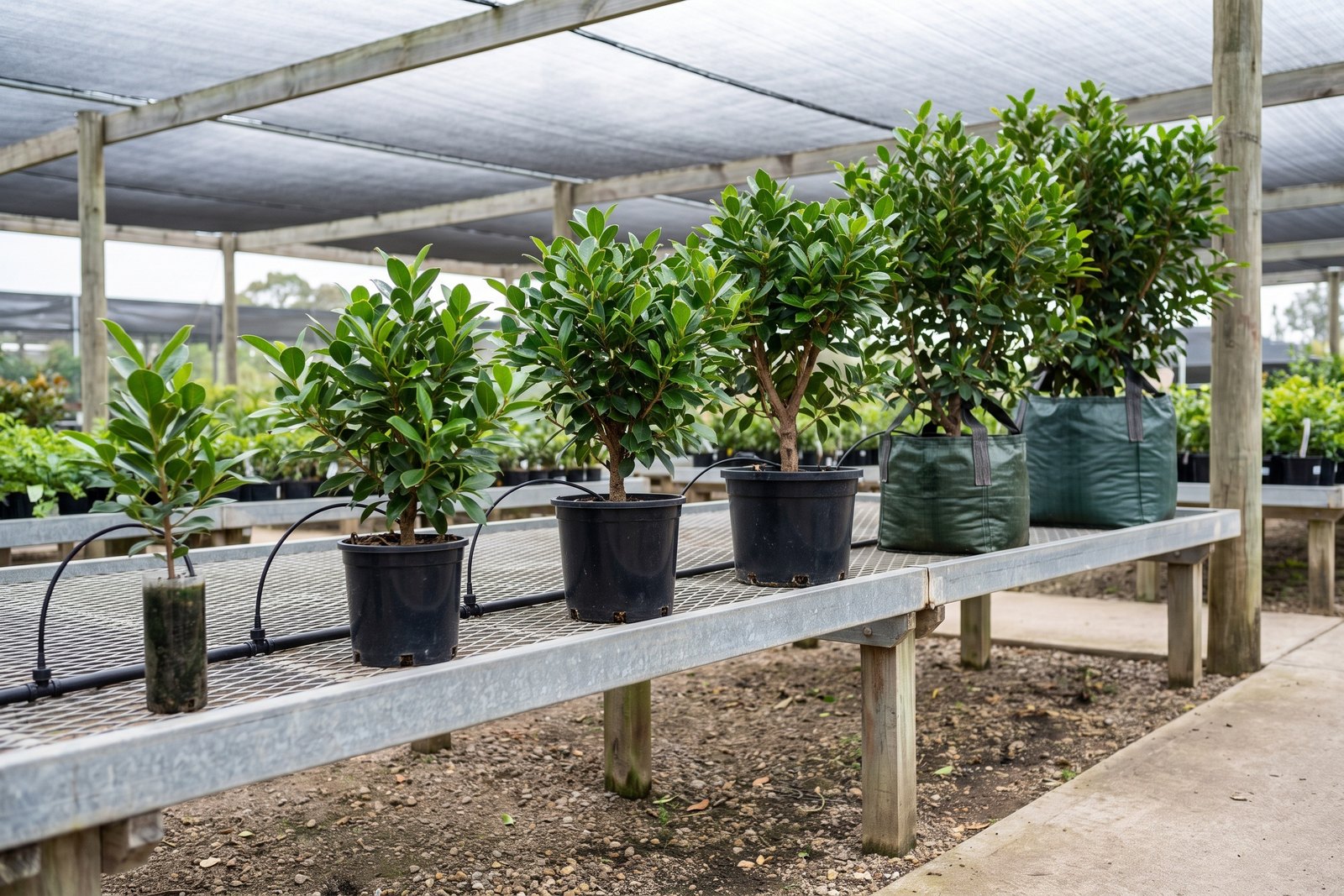
Plant Grades and Container Sizes, Market by Market
A #3 in Florida, a 200 mm pot in Sydney, a PB5 in Hamilton and a #2 in Ontario are roughly the same plant. This page sets the four markets' size ladders side by side from plug to field grown tree, explains what each grade is and how old, and names the standard each market specifies against.
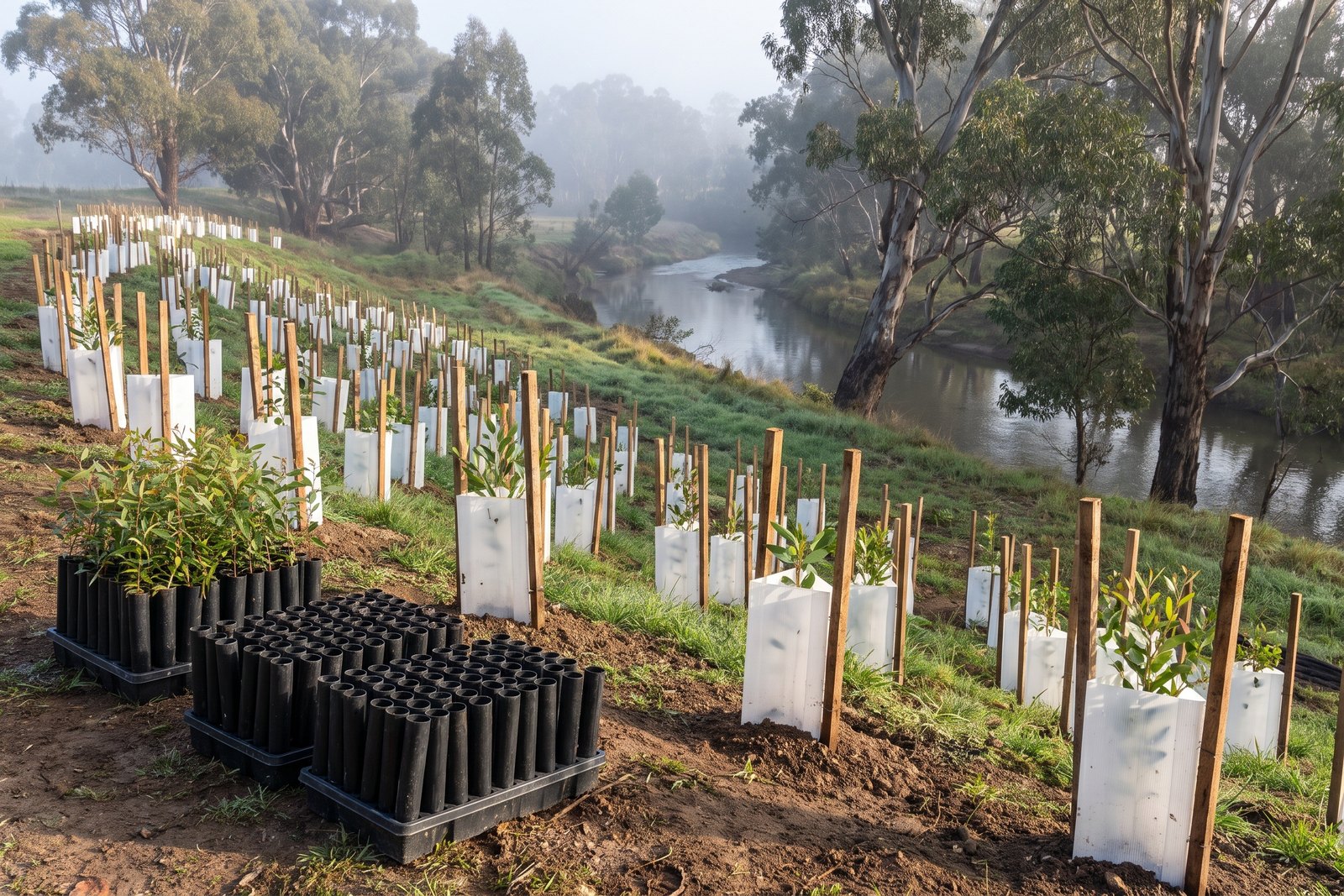
Sourcing Native Plants for a Restoration or Revegetation Project
Revegetation stock is grown to order, so a restoration project that books its growing a year ahead plants what the plan says. This page covers the provenance rule and how to ask for it, the grades the trade grows, contract growing and its timetable, reading the directory for a project, and what a grower's list cannot show.
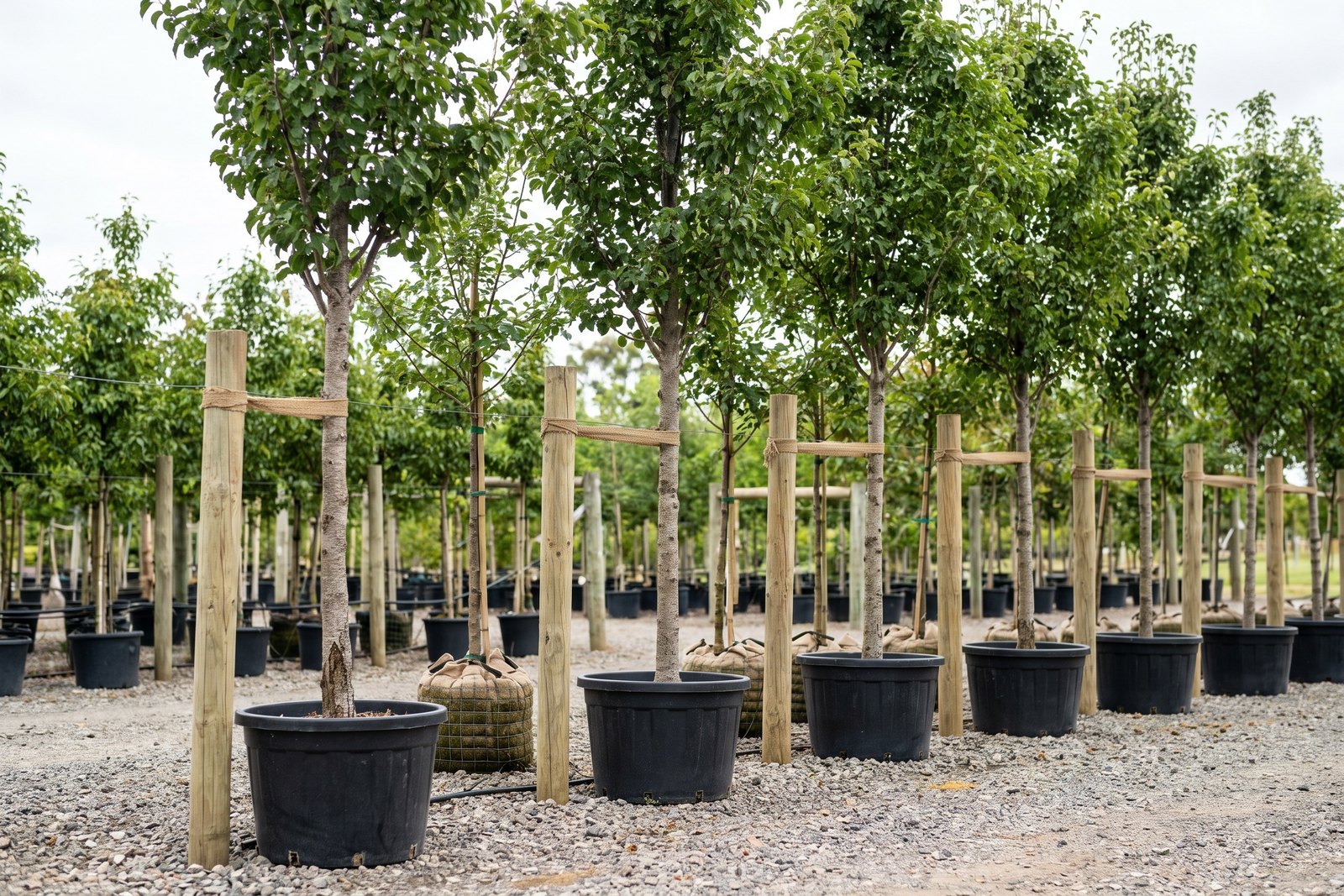
Specifying and Procuring Trees for a Street or Park Planting
A street or park planting fails at the specification more often than at the planting. This page explains the nursery stock standard to specify against, what goes in the clause, how the trade grows and grades advanced trees, where the growers are, the quote and tender process, and the inspection at the nursery and at delivery.