Nursery Plant Quality: Roots, Pests and Hardening Off
Quality in a nursery plant is mostly below the mix, in the roots, and a buyer who lifts one plant from each line sees what the price list cannot say. This page is the checklist: roots, stem and canopy, pests and diseases, hardening off, weeds and labels, the questions to send with the order, and the schemes that certify practice.
Updated October 24, 2026. Grower counts from the live us.hortosapp.com state hubs on 24 September 2026; median trade prices from the live price pages the same day, ahead of the first United States edition of the HortOS Plant Price Index.
On this page
Two trays of the same plant in the same pot at the same price can be a year apart in the ground: one roots into the site in a month and the other sits, yellows and is replaced. The one idea that matters most is that quality in a nursery plant is mostly below the mix, in the roots, and that a buyer who lifts one plant from each line at the nursery sees everything the price list cannot say.
This page sets out what a buyer looks for in a nursery plant before it leaves the grower: the roots, the stem and canopy, pests and diseases, hardening off, weeds and labels, and what the standards and the quality schemes in this market certify. It draws on the American Standard for Nursery Stock, ANSI Z60.1, which AmericanHort publishes and which sets the root ball, container and caliper relationships buyers specify against. It also draws on HortOS, a free directory of American wholesale plant growers with their published availability and trade prices, where a buyer finds the growers listing a plant and asks each the questions below. It is a buyer's checklist, not a horticultural text, and the arborist or horticulturist on the project has the last word.
Quick facts
| Roots first | White or pale, fibrous, reaching the pot wall without circling it, holding the mix together when the plant is lifted. Brown, mushy or sour-smelling roots, or a thick root wound round the pot, fail the plant. |
|---|---|
| The stem | Taper from the base, no wounds, cankers or sunscald, a single leader where one is specified, no included bark at the forks of a tree. |
| The canopy | In proportion to the pot and the roots, evenly branched, no dieback, no leaf drop out of season, a color the species should have at that time of year. |
| Pests and disease | Look under the leaves and at the growing tips for scale, mealybug, aphids, mites and caterpillars, and at the mix surface for fungus gnats and moss. Ask what was treated, with what, and when. |
| Hardening off | A plant grown under cover and sent straight to a windy site burns. Ask whether the line has been outside and for how long; soft, pale, floppy growth says it has not. |
| The scheme | The American Standard for Nursery Stock, ANSI Z60.1, which AmericanHort publishes and which sets the root ball, container and caliper relationships buyers specify against. Ask the grower whether it holds it. |
Roots
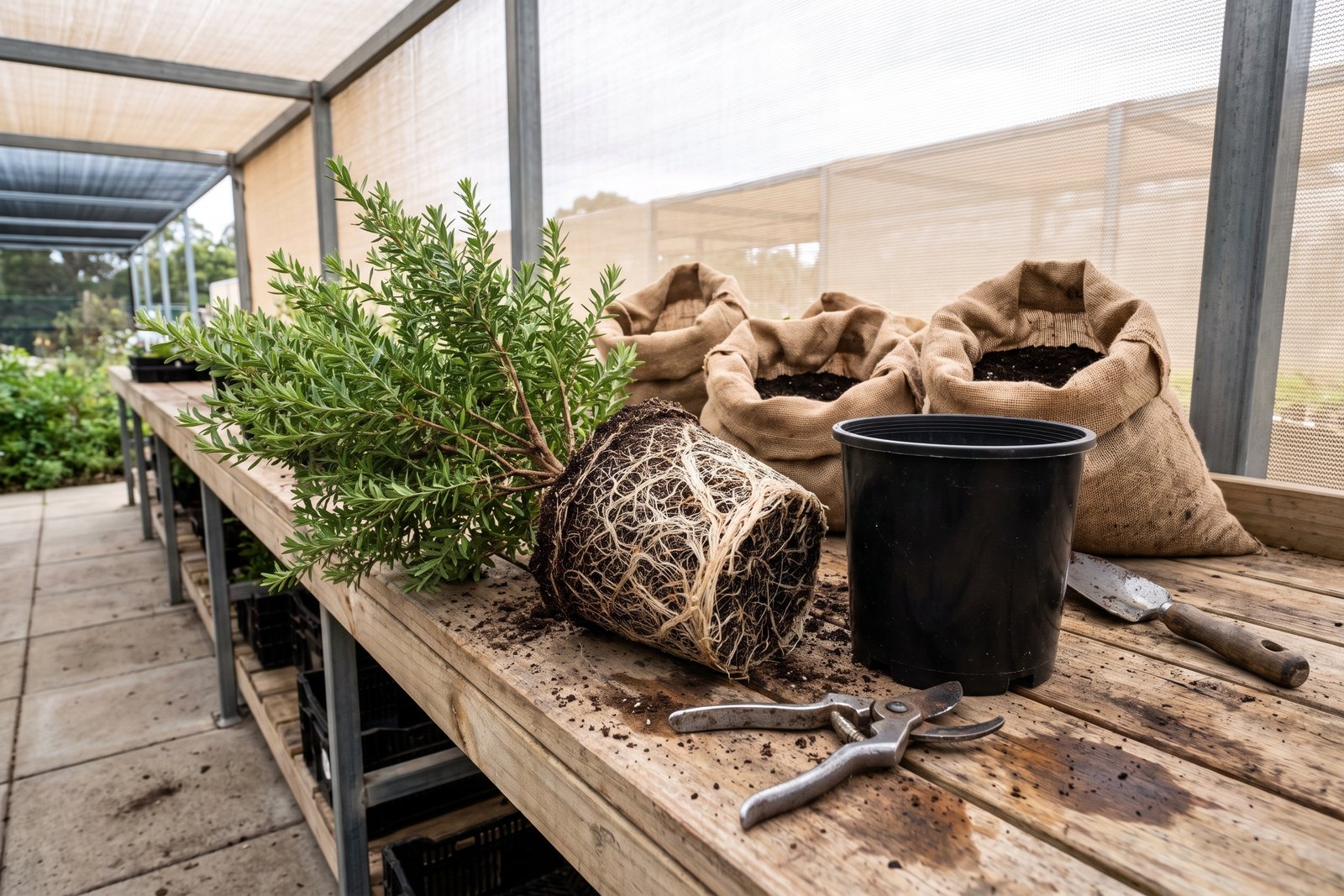
The root ball is the plant. Lift one plant from each line, by tipping the pot and sliding the plant out with a hand over the mix, and look. Healthy roots are white, cream or light tan, fine and branching, spread through the mix and just reaching the pot wall. The mix holds together but is not a solid mat. A plant that falls apart was potted on last week and is a small plant in a big pot. A plant with a thick root running round and round the pot wall has been in that pot a season too long and will keep circling in the ground.
The standards set tests for trees. The American Standard for Nursery Stock, ANSI Z60.1, published by AmericanHort describes the root ball a tree of a given stem and height should have, and a buyer may ask to see the root ball of a sample tree before accepting a run. Roots that are dark, soft, smell sour or fall away from the stem say the mix has been too wet or a root disease is present, and no price makes that plant worth planting. Specifying and procuring trees explains how the inspection right is written into a tree order.
Stem, canopy and form
- Taper. A good stem is wider at the base than at the top and stands without its stake. A tree that has been staked tight all its life leans the day the stake comes out.
- Wounds and forks. Look for pruning wounds that have not closed, cankers, sunscald on the south or west side, and forks where bark is pinched between two stems. A tree with included bark at its main fork splits in a storm years later.
- Leaders. A street tree is usually specified as a single leader; a shrub as multi-stemmed from the base. Check that the form on the bench is the form on the order.
- Proportion. A canopy too large for the pot has been pushed with water and fertilizer under cover and will wilt on site; a canopy too small for the pot has sat. The standards' height to container relationships are the measure.
- Color and leaf. Leaf color should be what the species shows in that season. Yellowing between the veins, purple tints out of season, or brown leaf edges say nutrition, cold or root trouble.
Pests, diseases and hygiene
A production nursery manages pests to keep its stock saleable, and a buyer's job is to see what came through. Turn leaves over and look at the growing tips and the leaf axils for scale, mealybug, aphids, thrips, mites and caterpillars. Look at the mix surface for liverwort, moss and fungus gnats, which say the mix has been wet for a long time, and at the base of the stem for collar rot. Spotted, blotched or distorted leaves on one line and not its neighbors say disease on that line.
Hygiene is what a buyer cannot see and should ask about. The American Standard for Nursery Stock, ANSI Z60.1, which AmericanHort publishes and which sets the root ball, container and caliper relationships buyers specify against. A grower that holds the scheme has an audited practice for water, mix, pests and weeds. One that does not may still be excellent, and the questions are the same: what pests have been treated this season, with what, when, and are there any restrictions on handling or planting after treatment. A conservation group or a school will want the answers in writing.
Hardening off, weeds and labels
- Hardening off. Stock grown under shade or plastic is soft: large pale leaves, long gaps between them, a stem that bends. A grower hardens stock off by moving it outside for weeks before dispatch. Ask how long the line has been outside, and ask for a plant from the middle of the bench, not the edge.
- Weeds in the pot. A pot with weeds in it has been sitting, and the weeds come to the site with the plant. Oxalis, bittercress and liverwort are the usual passengers. Refuse a line that is weedy.
- Labels. Every plant should carry the grower's tag with the botanical name and, where it applies, the cultivar. A tray with one tag in the corner is a tray a buyer cannot check. Where a cultivar is protected by a breeder's right, the tag is also the license.
- Water. A plant that is dry on the bench on the day of inspection has been dry before. Lift a pot: a light pot with a dry mix on a grower's irrigated bench is a warning.
Asking the grower
HortOS shows which growers list a plant and in which sizes, and the state hubs (Florida, California, Pennsylvania, North Carolina) show them by town, so a buyer can see the field before asking. The questions to send with the order are short: the potting date of each line, how long it has been hardened off, what treatments were used this season, whether the grower holds the scheme named above, and whether the buyer may inspect before dispatch. A grower that answers readily is the one to buy from; the answers go into the order.
Median trade prices in this guide are from the live us.hortosapp.com price pages on 24 September 2026: one price per grower, ex tax, freight not included, a median only where three or more growers price a class. A price well below the range for a grade is sometimes a grower clearing a line that has sat too long, which is the line to inspect first. Plant grades and container sizes by market explains what the grade names promise, and lead times, pre-orders and contract growing the inspection three months before dispatch that catches most faults in time to fix them.
What to watch for
- Buying the canopy. The biggest plant on the bench has often been pushed. Lift it; the roots say whether it was grown or forced.
- Trusting the pot size. A big pot with a small root system was potted on for the sale. Ask the potting date.
- Skipping the visit. Photographs show canopy. Only a visit shows roots, weeds and the plant at the back of the bench.
- Accepting at the planting. A plant in the ground is accepted. Every refusal happens at the nursery or on the truck.
- Treating one bad line as a bad grower. Every nursery has a line that sat. Refuse the line, keep the grower, and say why.
Getting it right
- Shortlist growers on HortOS that list the plant in the grade you need, and ask each the five questions: potting date, hardening off, treatments, the scheme, inspection.
- Visit before dispatch and lift one plant from every line; check roots, stem, canopy, pests, weeds and tags.
- Tag the lines accepted and write down what was refused and why.
- Count at the gate and look again for transit damage and drying; claim within the grower's window.
- Water the day they arrive and keep them in part shade until planted.
A word of caution
The checks on this page are a buyer's common practice and the standards' definitions as their publishers state them; the project's arborist or horticulturist decides what passes. Treatments and their handling rules are the grower's and the regulator's to state. The grower counts on HortOS are what the hubs printed on 24 September 2026, and the live pages change as lists arrive. HortOS never answers about a grower's practice or stock on its behalf.
Sources
- AmericanHort, American Standard for Nursery Stock (ANSI Z60.1): container classes, caliper and root balls.
- University of California Statewide IPM Program: pests and diseases of landscape plants.
- Trees Are Good, planting a tree: selecting and planting a tree.
- UF/IFAS Extension, Ask IFAS: Florida extension publications.
More guides
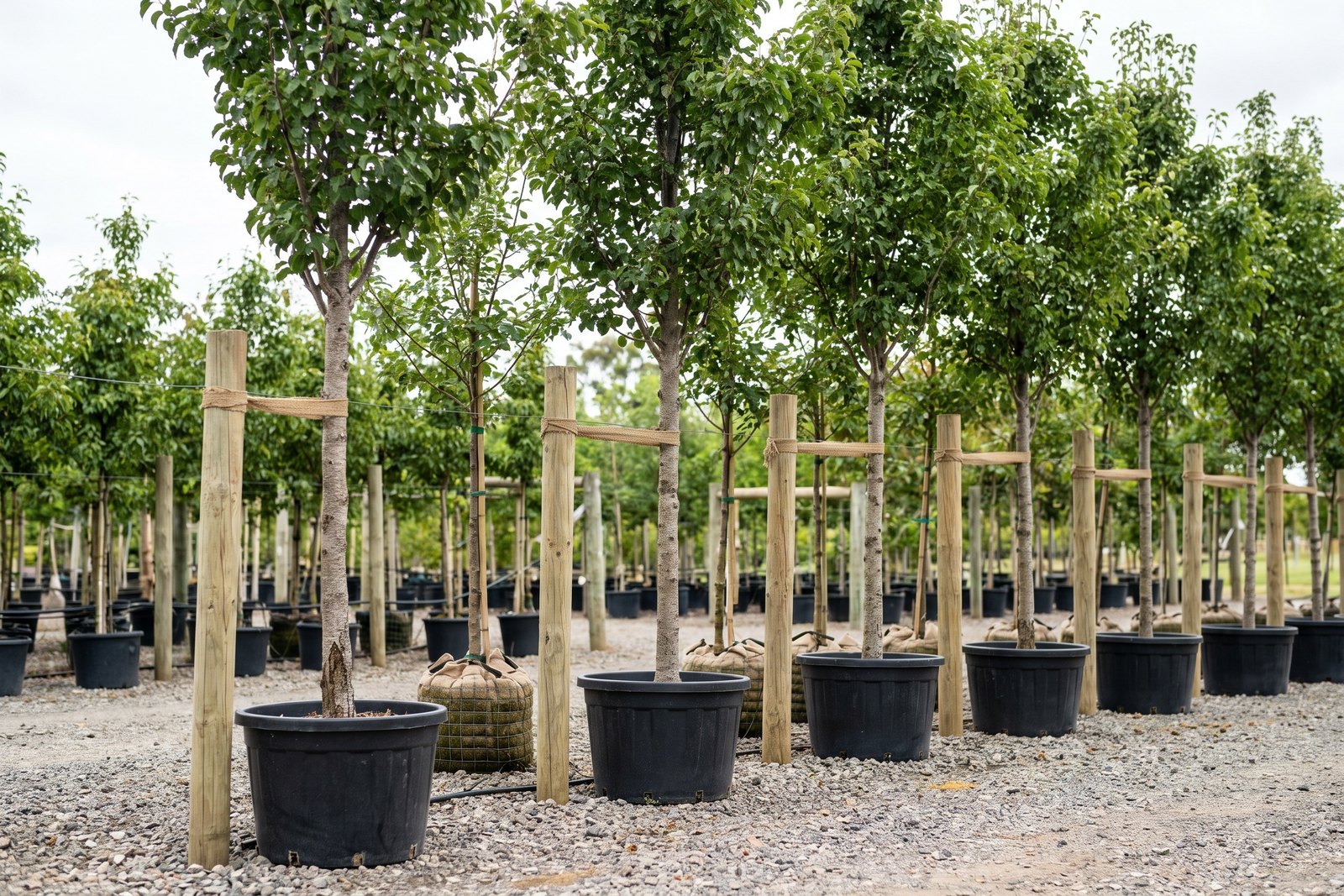
Specifying and Procuring Trees for a Street or Park Planting
A street or park planting fails at the specification more often than at the planting. This page explains the nursery stock standard to specify against, what goes in the clause, how the trade grows and grades advanced trees, where the growers are, the quote and tender process, and the inspection at the nursery and at delivery.
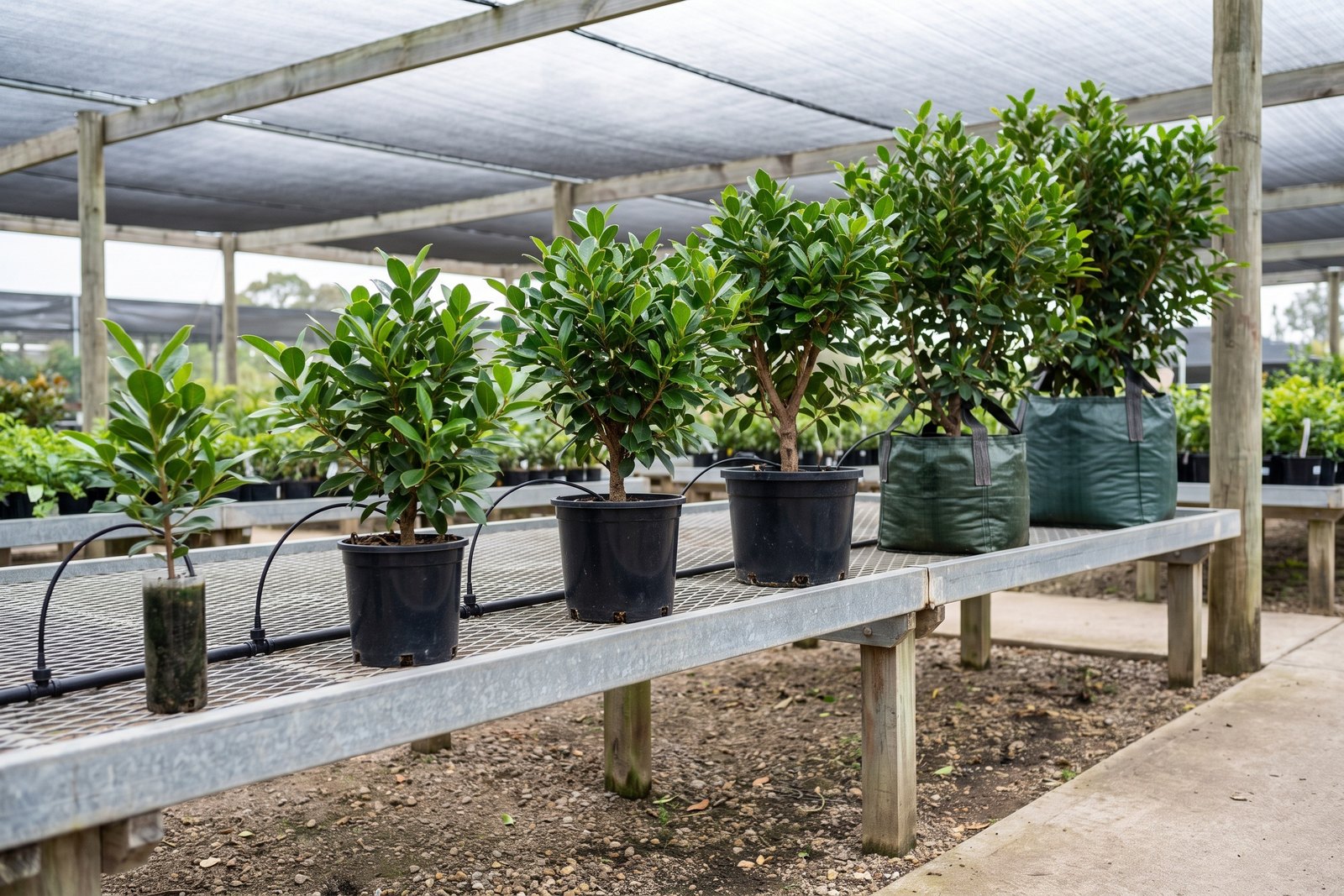
Plant Grades and Container Sizes, Market by Market
A #3 in Florida, a 200 mm pot in Sydney, a PB5 in Hamilton and a #2 in Ontario are roughly the same plant. This page sets the four markets' size ladders side by side from plug to field grown tree, explains what each grade is and how old, and names the standard each market specifies against.
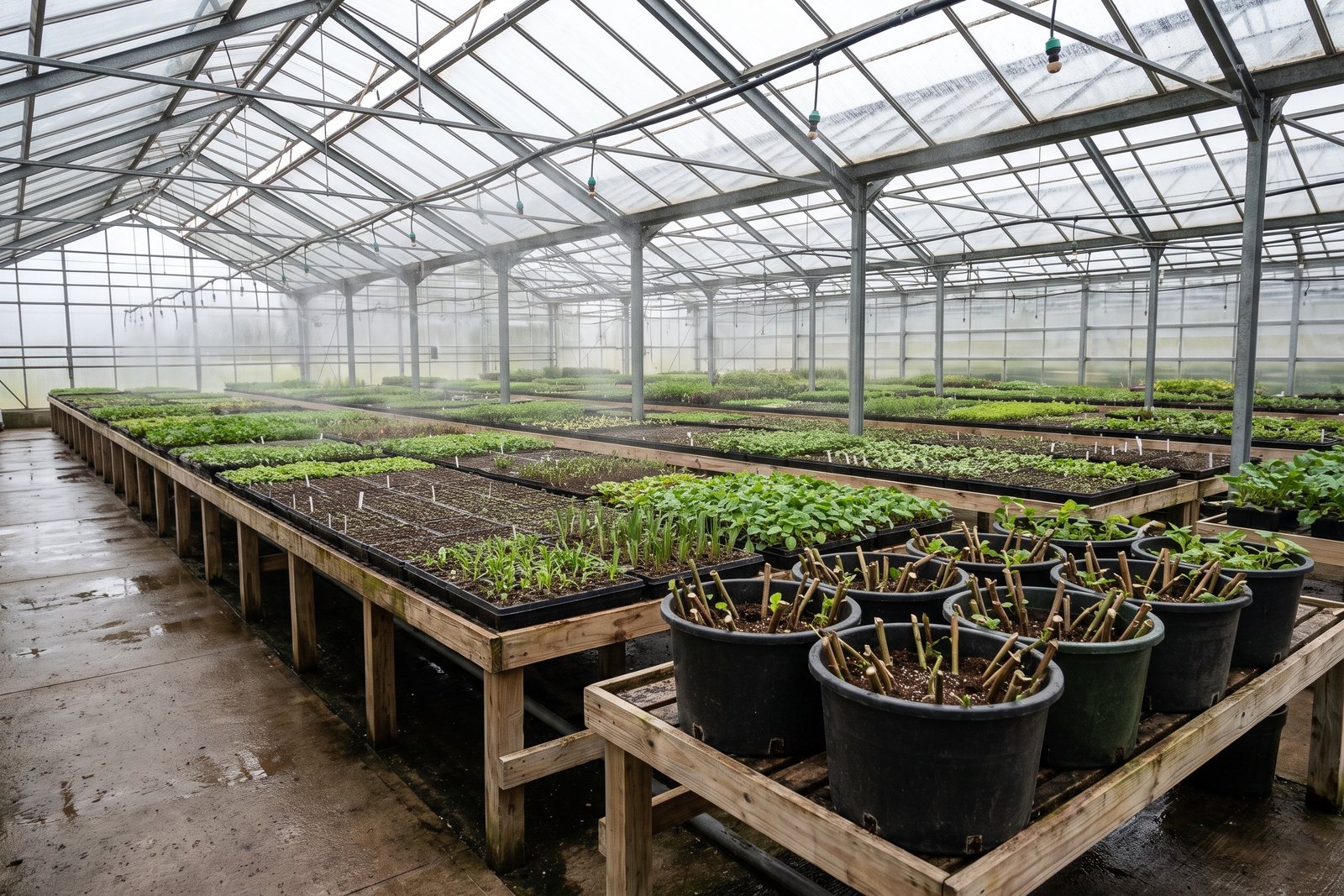
When to Order: Lead Times, Pre-Orders and Contract Growing
Every plant on a grower's list is a decision made a season or more ago. This page explains how long each grade takes to grow, the three ways a buyer secures stock ahead of the season, what a growing contract contains, the planting calendar in this market and how to read a current list for the year ahead.